HEADPHONE REVIEW
Less Drivers, Better Sound?——Aful Miracle One Review
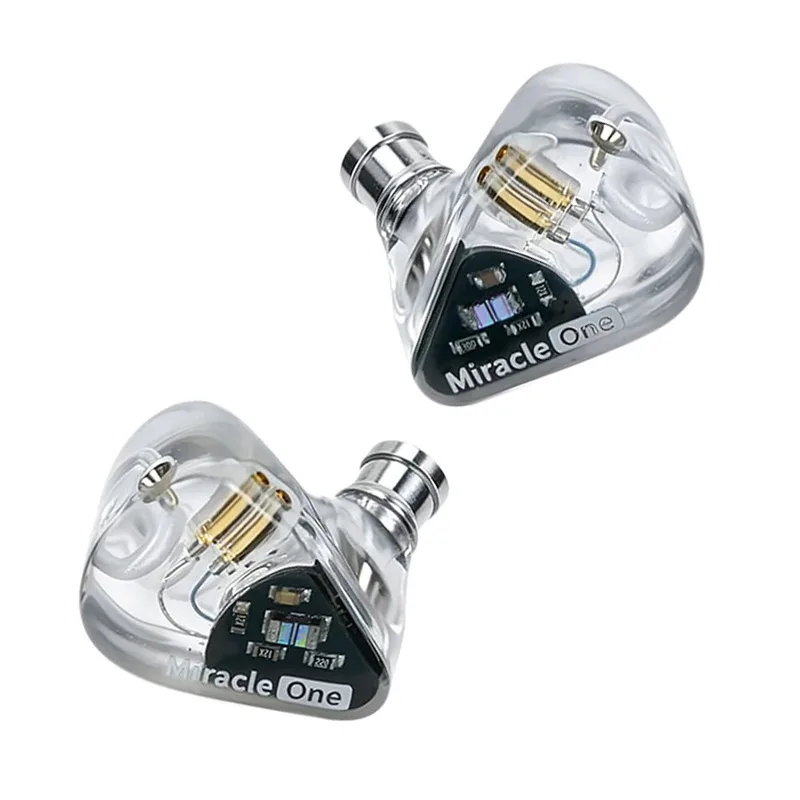
This time, I've got the AFUL Miracle One.
AFUL previously released the Magic One, a single balanced armature IEM, but this time they've gone in a completely different direction with a single dynamic driver.
By the way, when are we getting a Purple Magic One?

Design and Build
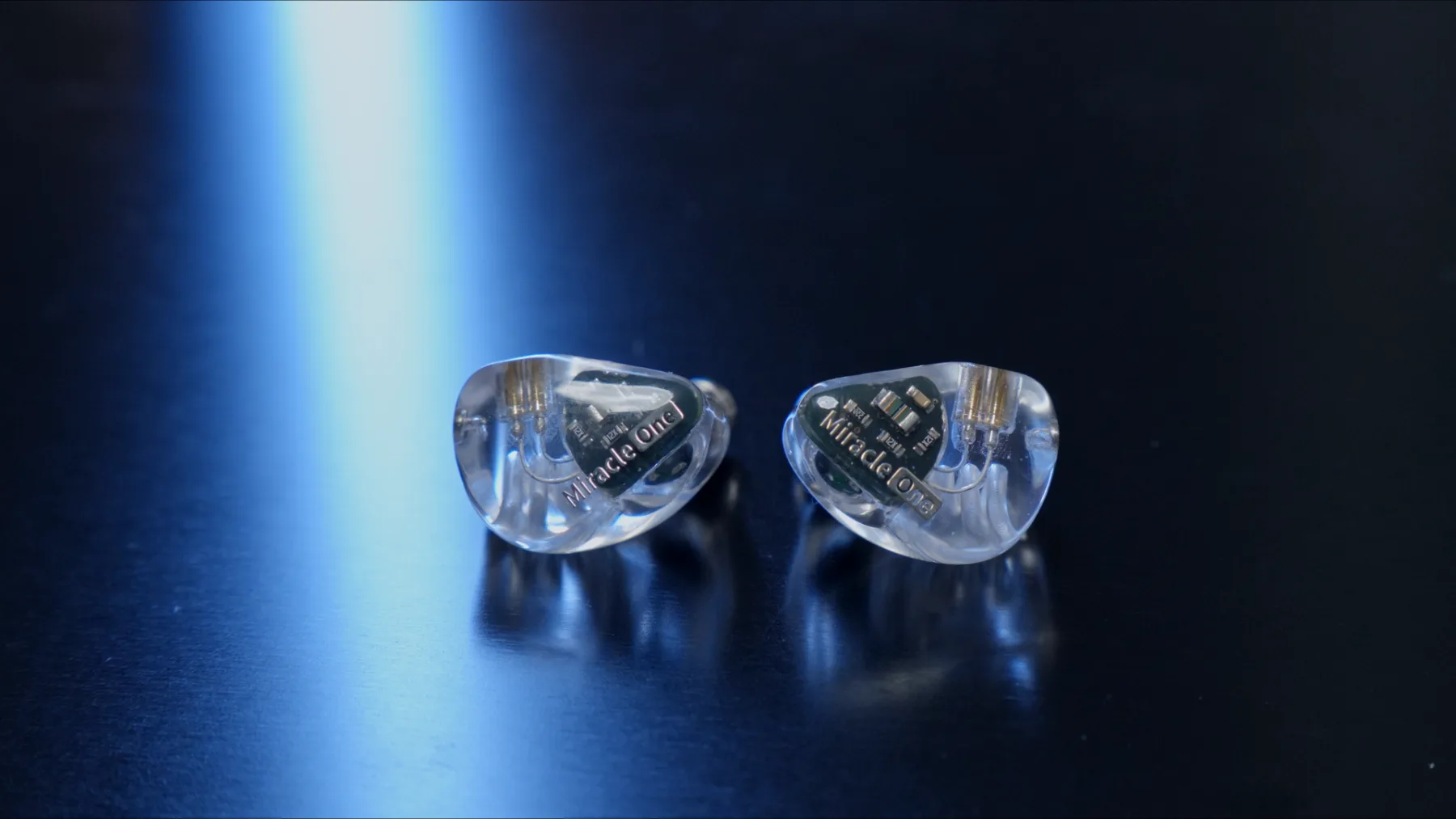
The entire shell is transparent, so you can see pretty much everything inside.
AFUL mentions a number of proprietary technologies, including SEM and its dual acoustic resonance structure for the front and rear chambers, blahblah
But as you probably know, I'm not particularly interested in marketing bluffs. What matters to me is how the thing actually sounds, so let's leave the marketing department to do its thing.
One interesting detail is that enormous PCB on the faceplate.
At first, I thought it was a crossover, but then I remembered we're dealing with a single dynamic driver. What exactly would you need a crossover for?
If not crossover, the only thing I can think of is notch filter. Yet AFUL told me that the acoustic filtering is achieved entirely through the internal chambers and pressure-relief structure rather than an electronic notch filter.
Hmmmm....
I'm not entirely convinced, but I'll leave that engineering discussion for another day.
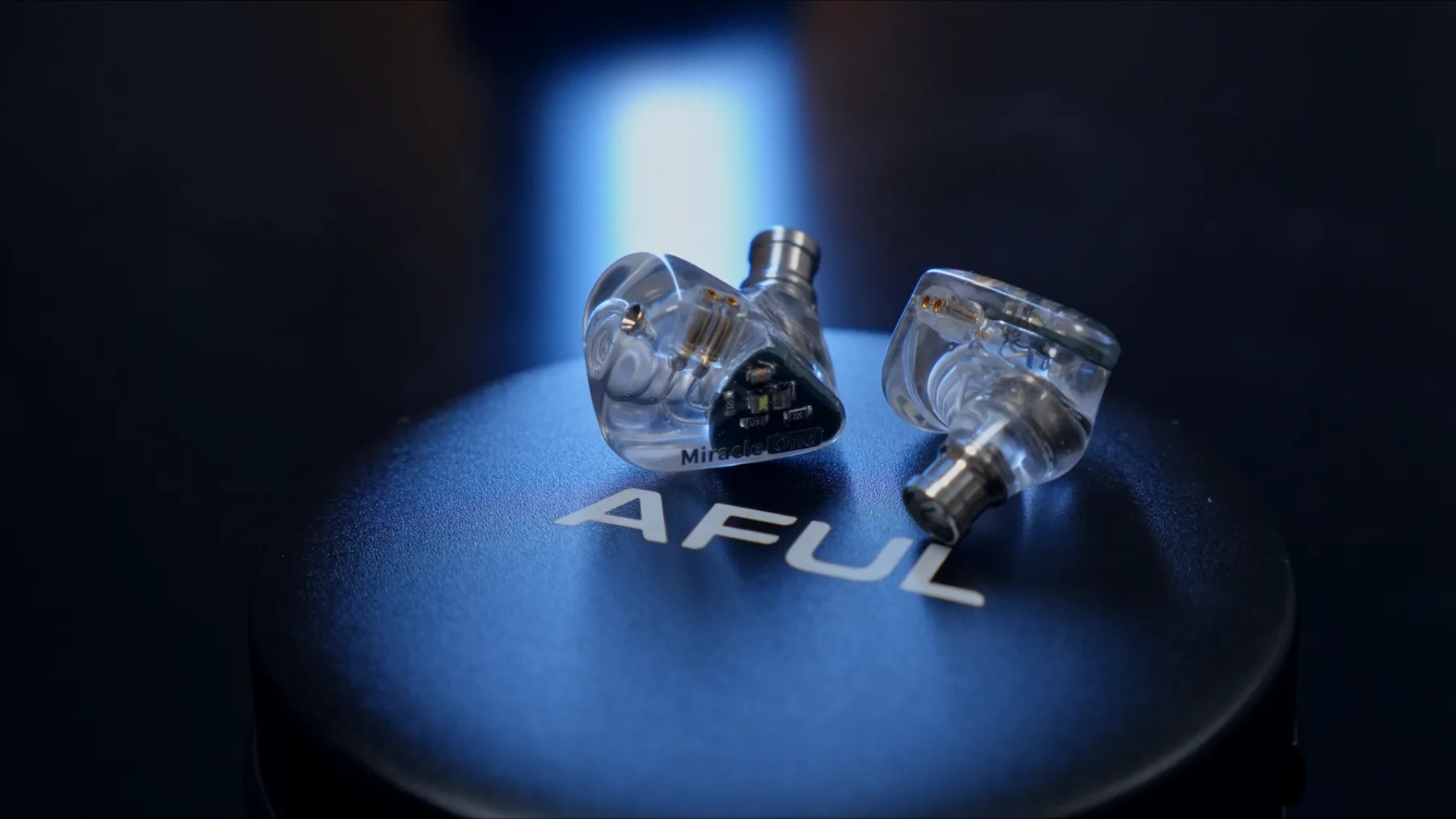
Looking inside, we can also see the 6mm dynamic driver and the pressure-relief structure at the rear.
As for the specifications, AFUL rates the Miracle One at 101dB sensitivity (although the reference unit isn't specified) with a nominal impedance of 18.5Ω.
My own measurement came out at 13.32Ω at 1kHz (AC Impedance)
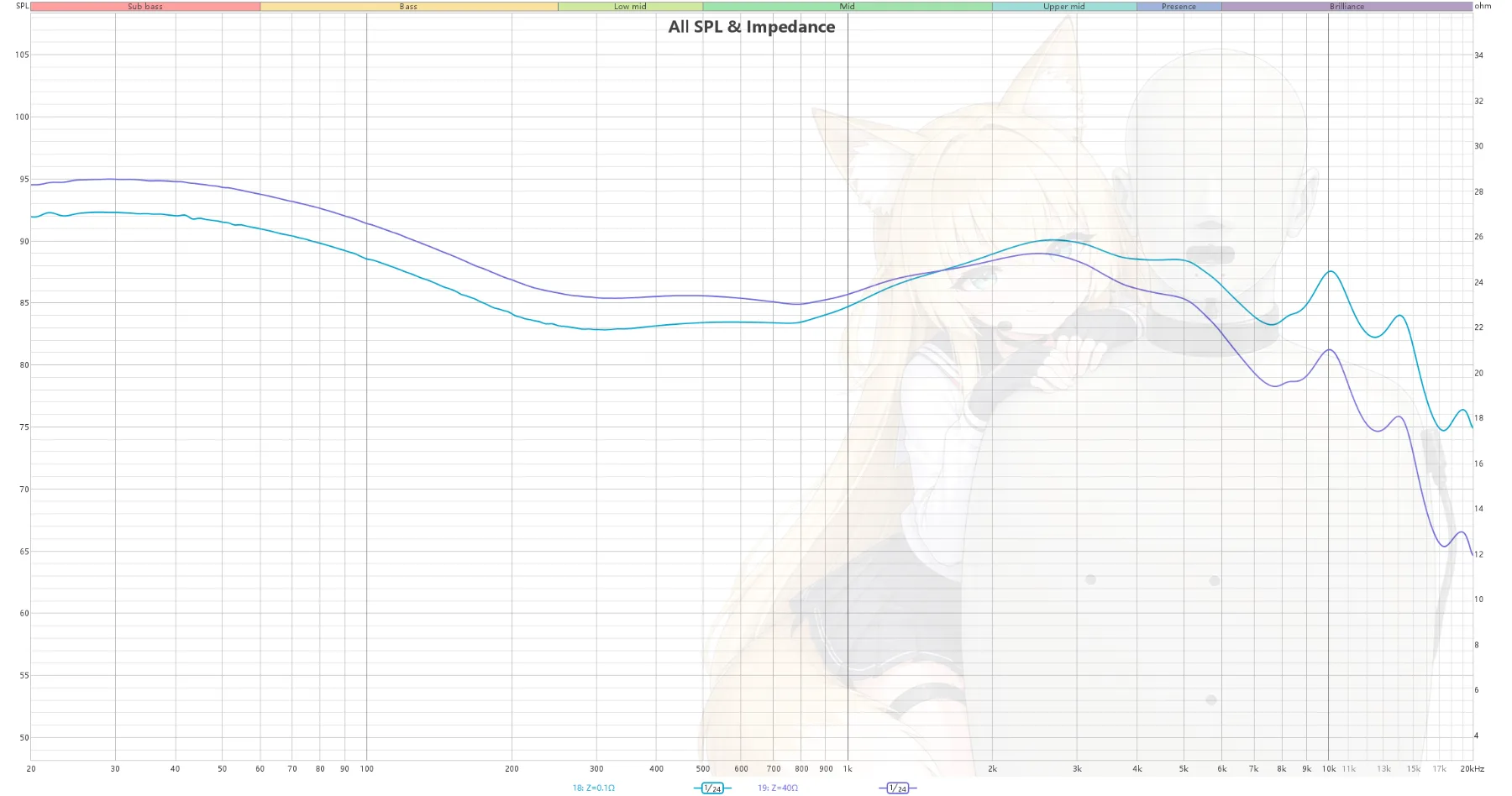
Impedance Curve: Yo dude, Is This skate Park?
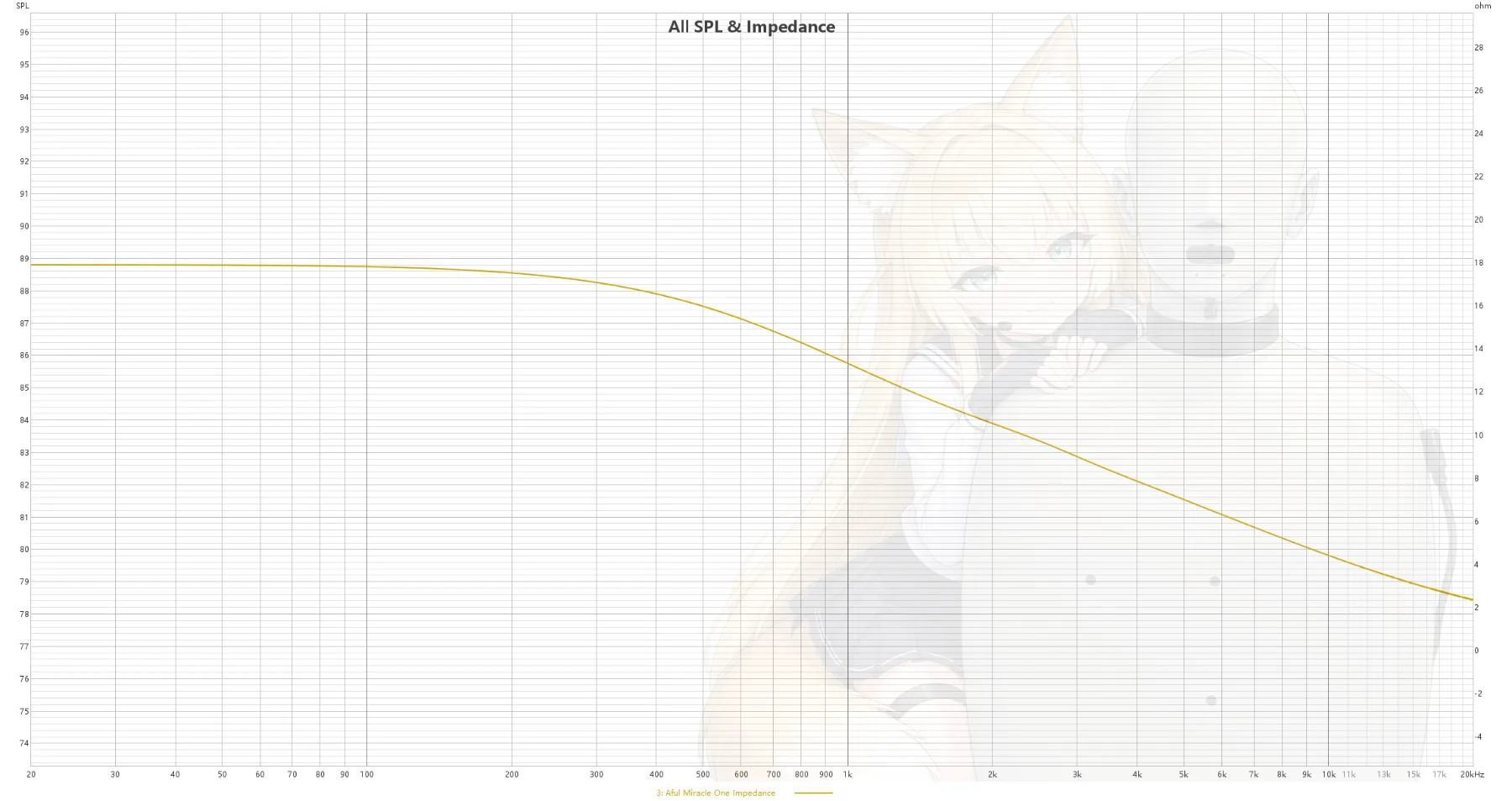
And the impedance curve is actually quite interesting.
It looks almost like a slope you'd find at a skate park, with the impedance gradually dropping as the frequency increases.
The maximum is 17.88Ω at 20Hz, while the minimum is just 2.36Ω at 20kHz.
That's a pretty substantial difference.
This means the Miracle One can be quite sensitive to source output impedance. I'd strongly recommend using a DAP or dongle DAC with low output impedance.
Otherwise, especially with certain tube amplifiers and soundcards, the frequency response can change quite dramatically.
Sound: A Basshead Single DD With a Surprisingly Natural Midrange
In short, I think the Miracle One is designed to sound exciting, powerful, and energetic.
Not necessarily aggressive or piercing kind of 'exciting', but the kind of sound that gives music a lot of weight and momentum.
BASS
The first thing I noticed was its bass.
There's plenty of quantity, and it occupies a fairly large portion of the overall presentation.
Every drum hit has a satisfying sense of impact, while the sub-bass extends quite deep and rebounds quickly.
The result is a very bouncy, elastic low end.
Both electronic and acoustic drums sound excellent, and thanks to the relatively fast attack and decay, the overall transient response is also very good.
The bass has this almost physical sense of movement, like an actual drumhead vibrating after being struck.
It's easily one of the Miracle One's strongest characteristics.
Mids
The midrange is relatively moderate in density, with a slightly warm timbre.
It's not an obviously warm tuning, though. It's more like there's a soft, warm light falling over the vocal image, giving everything a slightly pillowy quality.
Vocals have a fairly natural size and placement, without being pushed too far forward.
The Miracle One doesn't particularly emphasize tiny details like mouth movements or articulation. Instead, it focuses more on the overall smoothness and softness of the vocal presentation.
Treble
Then we get to the treble.
And well, it's quite conservative.
The Miracle One isn't so dark that everything sounds completely muffled, but there's no denying that the upper frequencies are relatively restrained.
The overall presentation actually reminds me quite a bit of CrinEar's Reference
But here's the interesting part.
Even though the treble rolls off quite aggressively, it doesn't completely sacrifice detail retrieval.
Little electronic effects layered behind vocals, hi-hats, shakers, and other high-frequency elements are still reproduced with surprisingly good clarity.
So the treble is dark, with relatively little airiness and brightness, but the finer details are still there.
It's a rather unusual combination, and I think it works quite well for people who don't particularly enjoy bright or fatiguing headphones.
Soundstage
The soundstage is another pleasant surprise.
The horizontal width is quite generous, and there's also a decent amount of front-to-back depth.
Separation is good, and the overall presentation has a convincing sense of space.
For a single dynamic driver at this price, I think that's a pretty respectable result.
Measurements: A Nearly Perfect Inside-the-Bounds Tuning
Looking at the frequency response measured on my Brüel & Kjær 5128, the Miracle One is almost a textbook example of an inside-the-bounds tuning.
There's something to be said about JM-1 after all.
Although the idea of deriving a pressure-field target from a diffuse-field response does raise some theoretical questions imo, it seems that following JM-1 doesn't make it particularly difficult to produce a pleasant-sounding IEM.
Anyway, back to the graph.
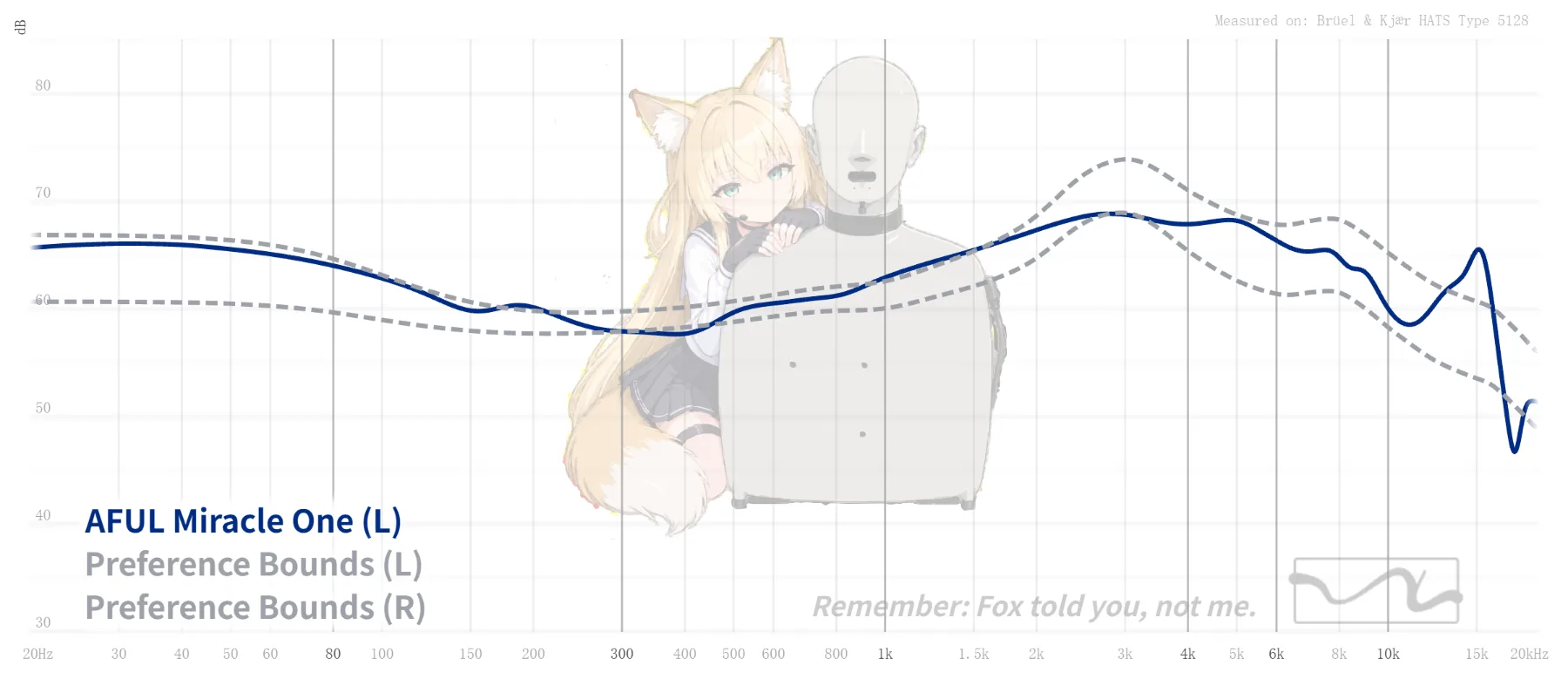
The entire 20–100Hz region stays comfortably within the preference bounds, with a noticeable emphasis relative to the lower midrange.
This should produce a fairly prominent and full-bodied bass response, giving kick drums, electronic beats, and bass guitars plenty of weight and physical presence.
From around 500Hz to 1.5kHz, the lower midrange also remains within the bounds, without any particularly obvious dips.
Moving into the main pinna-gain region, the response between 1.5 and 4kHz is remarkably smooth.
There's no particularly sharp peak or deep valley, just a broad and gentle contour with a relatively low Q factor.
This should help preserve the natural timbre of vocals and instruments such as pianos and guitars.
However, the main pinna-gain region sits relatively close to the lower preference boundary, so female vocals, violins, and brass instruments will probably have a more restrained presentation.
Beyond that, there's very little worth discussing until we reach around 15kHz, where a small peak extends beyond the preference bounds.
In theory, this could contribute a little extra upper-treble airiness.
But if you look just a little further, the response drops off extremely sharply around 16kHz.
It's reasonable to suspect that we're approaching the upper frequency limit of this particular driver, although measurements at these frequencies are also highly dependent on coupling and insertion depth.
And that would explain why the Miracle One doesn't have particularly strong airiness despite that little peak around 15kHz.
Overall, this is an exceptionally smooth frequency response with very few abrupt changes.
The bass is relatively prominent, the midrange has no significant dips that would disrupt instrument timbre, and the treble remains quite restrained.
In other words, the graph describes pretty much exactly what I hear.
A full-bodied, smooth, and gentle presentation with a strong low end and a relaxed upper frequency response.