HEADPHONE REVIEW
A $6,000 Planar That Just Wants to Be Gentle——Meze ARTA Review
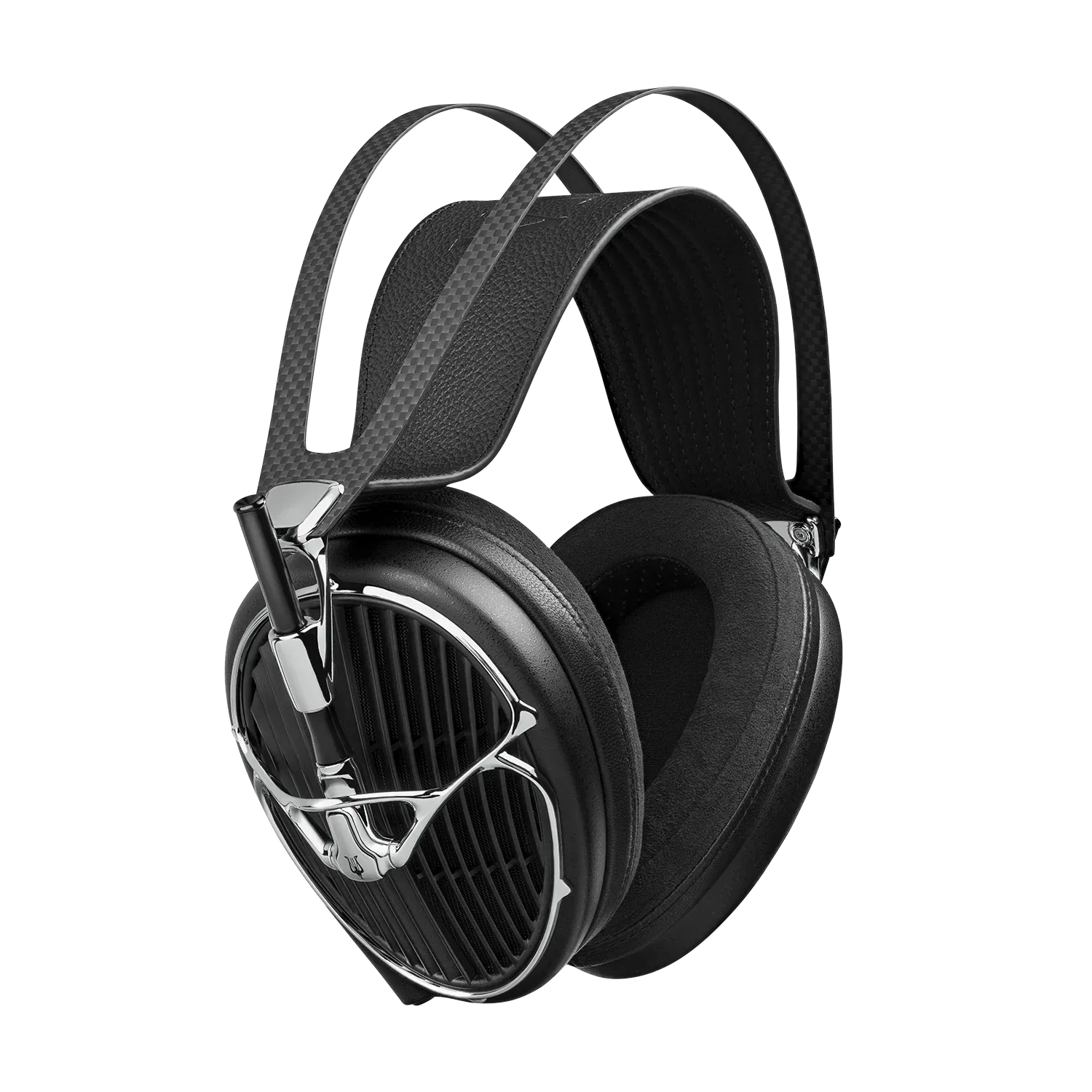
Meze ARTA Review: A $6,000 Planar That Just Wants to Be Gentle
The Meze ARTA is probably one of the most interesting headphones I've tried this year, and not just because it looks absolutely gorgeous.
Honestly, the design alone was enough to convince me to buy one. I've done this before with headphones and audio gear, say, QDC VX and Headamp GS-X MK2. And the ARTA was another one of those products that simply looked too good to resist.
Sound: Warm, Soft, and Almost Ridiculously Gentle
Bass
If I had to describe the ARTA in a few words, I'd say it's warm, thick, soft, and incredibly smooth.
The bass is on the slower side, with a moderate amount of impact. It doesn't hit quite as hard as something like the HE1000se, and the sub-bass extension isn't particularly impressive either if you ask my honest opinion.
But what it does have is this really satisfying sense of weight and elasticity. The low end feels meaty, a little plump, almost pillowy, yet there's enough rebound to keep it from becoming completely sluggish.
It's not the kind of bass that tries to punch you in the face. It's more about giving the music a satisfying sense of rhythm and warmth.
Vocals
And then we get to the vocals.
This is where I think the ARTA really shines.
It reminds me quite a bit of the Final D8000 Pro Limited, another planar that I find particularly emotional and expressive with vocals.
There's something wonderfully gentle about the way the ARTA presents a singer's voice. Subtle inflections, soft phrasing, and the way notes linger all come through beautifully, especially with female vocals.
I absolutely love listening to older Japanese ACG songs on this thing. Sakura Tange's recordings from Cardcaptor Sakura, for example, are a fantastic match.
The vocals have this nostalgic sweetness, with a soft, almost fluffy texture that makes everything feel incredibly soothing.
And perhaps the most surprising part?
There's practically no sibilance!
Coming from Meze, I honestly consider that quite an achievement.
Treble
The treble is extremely smooth, with very little sharpness or aggression. It doesn't try to impress you with artificial sparkle or exaggerated detail.
Instead, the upper frequencies gradually fade into the background. Sometimes the ARTA can even sound a little dark, with less airiness and cymbal shimmer than I'd ideally want.
But that's also what makes it so ridiculously easy to listen to.
Of course, there's a trade-off. If you're looking for explosive dynamics, brilliant string harmonics, or that last bit of treble bite, the ARTA might feel a little too relaxed.
Soundstage
As for the soundstage, it's not particularly huge by flagship standards. The horizontal width is fairly intimate, but the vertical separation and front-to-back layering are surprisingly good.
It doesn't give you an enormous concert hall. Instead, everything feels neatly arranged, cohesive, and comfortably wrapped around you.
Measurements
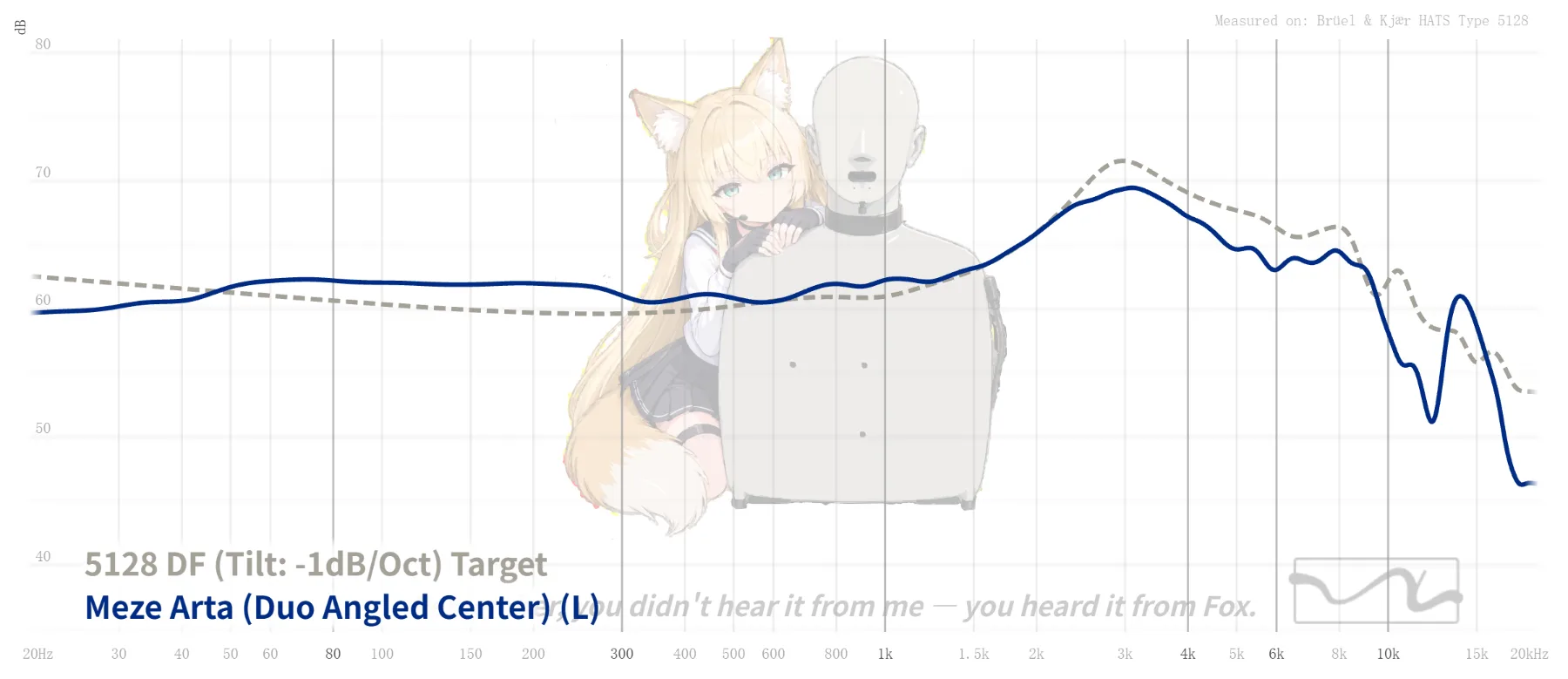
I measured the ARTA using the Brüel & Kjær 5128, and the frequency response is pretty interesting.
It follows the 5128 diffuse-field target remarkably closely when a -1dB/oct tilt is applied, with almost the entire response staying within the preference bounds.
The sub-bass sits near the lower boundary, which helps explain why the deepest bass isn't particularly powerful.
Around 100Hz, however, the response rises above the preference bounds, adding warmth and thickness to male vocals, cellos, bass guitars, and the lower registers of a piano.
The midrange stays relatively well controlled, while the sibilance region remains within the bounds and approaches the lower boundary in places.
Beyond that, the treble generally rolls off as frequency increases.
Basically, the measurements tell pretty much the same story as my ears: a thick, warm, extremely smooth headphone that prioritizes comfort and musicality over brightness and aggression.
Duo Angled Earpads vs Slim Alcantara Earpads
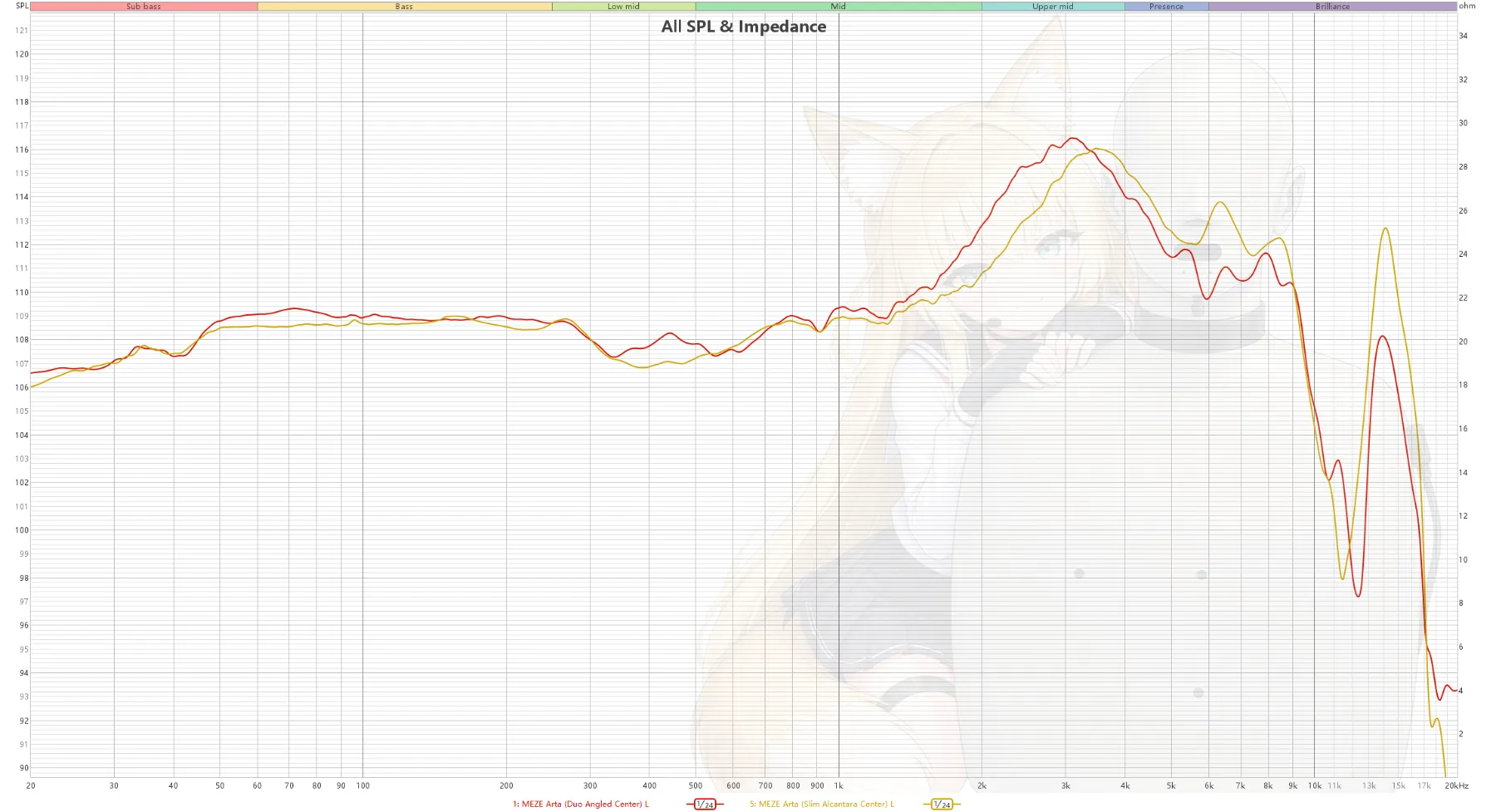
Meze also includes two sets of earpads, the Duo Angled and Slim Alcantara.
Interestingly, the Slim Alcantara measures with more energy in parts of the treble, but I actually find it darker and gentler in listening.
Impedance Curve
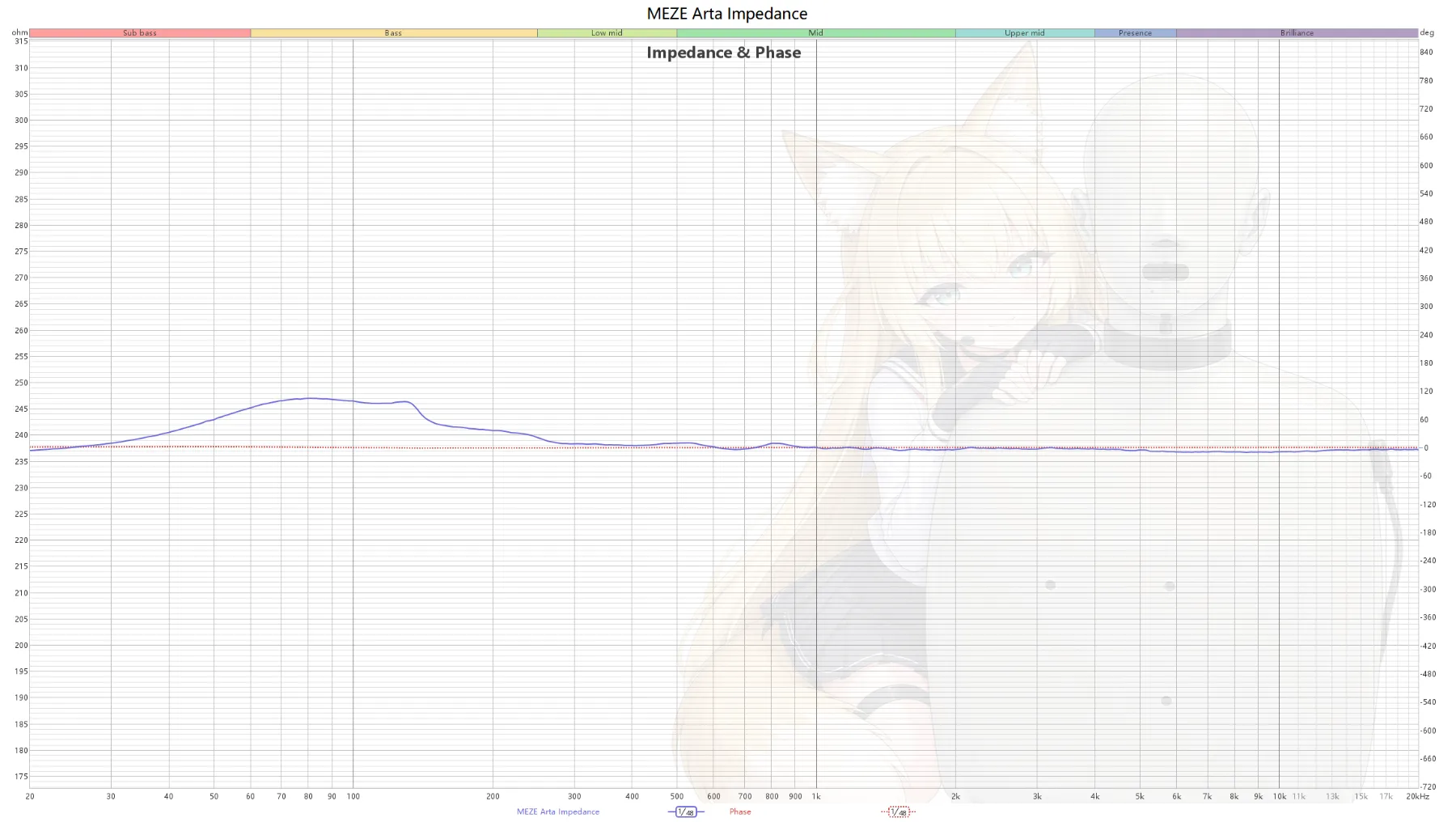
And then there's the impedance.
At 1kHz, I measured 237.6Ω, with a maximum of 246.9Ω around 80Hz and a minimum of 237Ω at 20Hz.
That impedance hump is quite unusual for a planar magnetic headphone, although the percentage variation is relatively small.
The result is that the ARTA should be fairly insensitive to amplifier output impedance, making it an interesting option for high-voltage headphone amplifiers, including certain tube designs.
How Does It Compare to Other Flagships?
Hifiman Susvara / Suavra Unveiled
Let's start with the obvious one: the HIFIMAN Susvara.
And yes, I still think the original Susvara is better when it comes to pure technical performance.
Give it a properly powerful amplifier with as much current you can get, and its resolution, soundstage, and sheer sense of scale are still among the best I've heard from any headphone.
The original Susvara remains one of my all-time favorites.
The Susvara Unveiled, however, is a different story. I find its tuning more focused on the upper mids and treble, whereas the ARTA takes almost the opposite approach.
It's warmer, thicker, and considerably more relaxed.
I'm not saying the ARTA destroys the Susvara Unveiled. But at a similar price, it offers a genuinely different flavor of flagship planar sound, particularly for people who listen to a lot of pop and vocal-focused music.
Final D8000 Pro Limited
The Final D8000 Pro Limited is another interesting comparison.
I love its design and emotional vocal presentation, but I've never been particularly impressed by its technical performance. The soundstage feels almost completely flat, as though everything has been glued onto a single sheet of paper.
The ARTA delivers a similarly rich and expressive vocal presentation, but with much better depth, layering, and overall resolution.
You still get those lovely vocals, just without the entire band turning into cardboard cutouts.
Austrian Audio Composer
And then there's the Austrian Audio Composer.
The Composer has a more neutral, slightly leaner tonality and is especially impressive with string instruments. Violins have that brilliant, shimmering upper-register bite that can make classical recordings sound incredibly exciting.
Unfortunately, that same energy can also make certain vocals rather sharp.
The ARTA goes in the opposite direction, trading some of that brilliance for a much smoother and more forgiving presentation.
So ultimately, I think these headphones appeal to very different listeners.
One Thing I Really Appreciate About Meze
There's something else worth mentioning, and it has nothing to do with the sound itself.
Meze's technical documentation for the ARTA is genuinely impressive.
They provide unusually detailed specifications, including the effective radiating area, driver assembly weight, diaphragm mass, and practical amplifier requirements.
Even the FAQ is actually useful!
Instead of the usual marketing nonsense about how amazing the product supposedly sounds, Meze explains why they designed such a high-impedance planar, what kind of amplifier it needs, and whether portable equipment can drive it properly.
I wish more Hi-Fi manufacturers would take this approach.
Especially in today's IEM market, where increasingly ridiculous prices and endless driver-count competitions sometimes seem more important than actual acoustic engineering.
More expensive drivers and fancier materials don't automatically mean better sound.
I'd much rather see manufacturers explain what they've actually engineered, why they've done it, and what measurable improvements their designs are supposed to achieve.
At least Meze is making an effort here.
Final Thoughts
I don't think the ARTA is some revolutionary flagship that suddenly makes every other headphone obsolete.
Its soundstage isn't enormous, the sub-bass could extend deeper, and the treble is definitely on the restrained side. If you primarily listen to classical music and want explosive dynamics or brilliant string reproduction, there are probably better choices.
But for vocals, pop, and especially Japanese ACG music?
I genuinely love this thing.
The ARTA has a wonderfully warm, soft, almost marshmallow-like presentation, with beautifully expressive vocals and practically no fatiguing edge.
It doesn't try to overwhelm you with technical fireworks. And unlike some other warm-sounding headphones, it still manages to maintain good resolution and convincing spatial depth.
If the original Susvara is a headphone that constantly reminds me how technically incredible planar magnetic technology can be, the ARTA is one that reminds me why I enjoy listening to music in the first place.
It's not the most aggressive or technically spectacular flagship out there.
It's just ridiculously comfortable to listen to, and sometimes that's exactly what I want.
For my music library and personal preferences, the ARTA is an absolute joy.
WATCH THE REVIEW
 Watch the video reviewyoutube.com · Watch video ↗